
Trump Confirms Tariff-Free Beef Import Continues From Brazil and Argentina Amid Safety Concerns
President Donald Trump has confirmed that tariff-free beef entering the United States will come from Brazil, Argentina and several other countries, as the administration seeks to address declining domestic beef supplies.
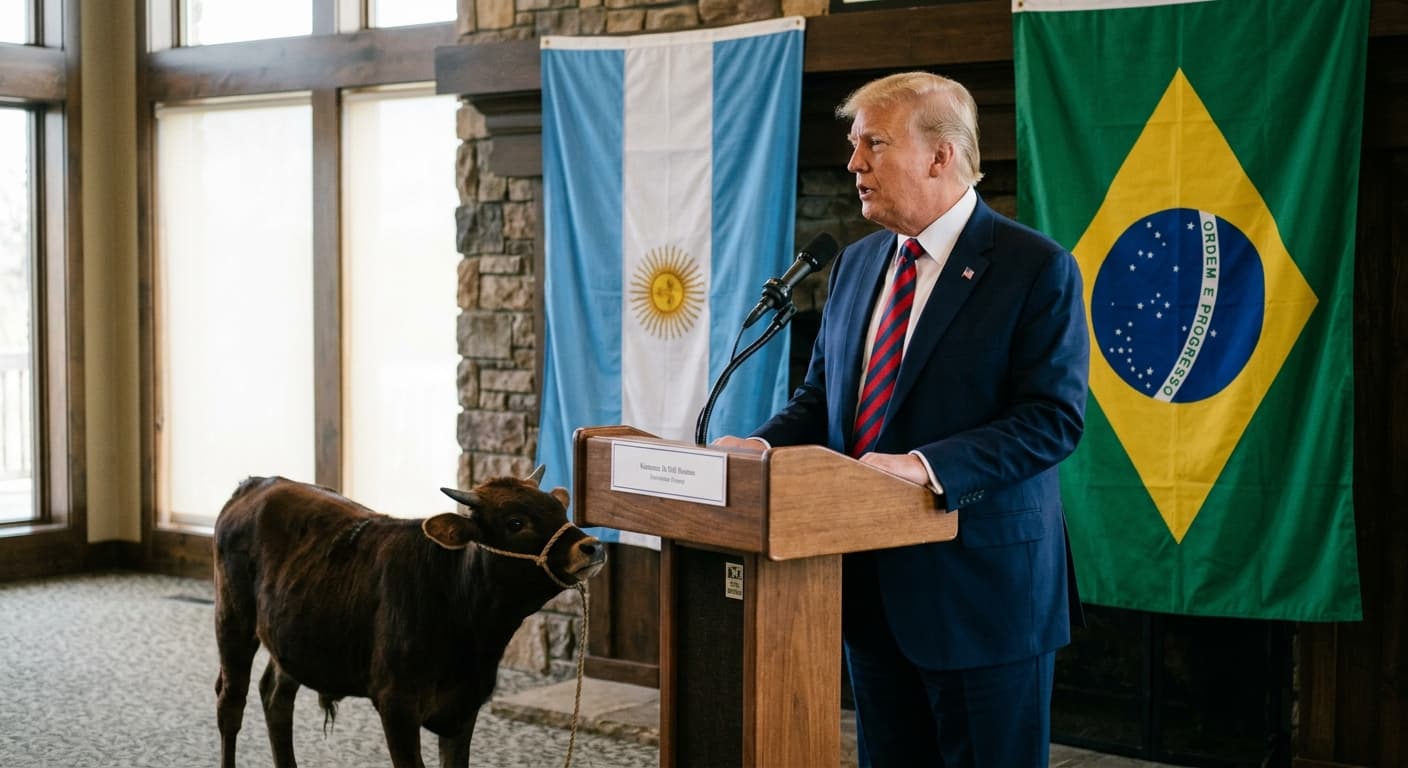
WASHINGTON: The White House announced the tariff waiver last month, with the new policy taking effect this week. However, the administration had initially declined to identify the countries that would supply the additional beef. Speaking in the Oval Office on Friday, Trump confirmed that imports would come from Brazil and Argentina, describing the meat as “very clean” and “very good.”
The decision has sparked concern among US ranchers, lawmakers and industry experts, who fear that a sharp increase in imports could place additional pressure on inspection facilities and affect consumer confidence in the quality of beef available in the country.
The announcement came a day after Trump met privately with Brazilian businessman Joesley Batista, co-owner of one of the world’s largest meatpacking companies.
Brazilian beef exporters, which normally face a tariff of about 26.4%, have accumulated additional supplies after the European Union halted imports from Brazil over concerns related to food safety and antibiotic use.
Trump also signed two executive orders on Friday aimed at changing meat production and labeling rules. One would make it easier for ranchers and farmers to process and sell their own meat, while the other requires country-of-origin labeling for imported beef.
Some US ranchers have opposed changes to the federal inspection system, arguing that existing safeguards are essential for public health and consumer trust. They have also called for clear labeling of imported beef so consumers can distinguish it from meat raised in the United States.
Why Is Brazilian and Argentine Beef Facing Scrutiny?
Brazilian beef has come under renewed scrutiny following the European Union’s decision to restrict imports over concerns about antibiotic use and food-safety standards. EU regulations prohibit the use of certain antimicrobials in food-producing animals because of concerns that antibiotic resistance could make infections in humans more difficult to treat.
Argentine beef has also faced controversy. Reports indicate that a shipment of about 30,000 pounds entered Texas and Florida without inspection by US personnel. In August, China also rejected a 22-ton shipment of Argentine beef after inspectors reportedly detected chloramphenicol contamination, an antibiotic prohibited for use in food-producing animals under US standards.
The developments have intensified debate over whether increased foreign beef imports can meet US safety requirements while helping ease pressure on domestic beef supplies.